The United States is home to several major stock exchanges that have shaped global finance. The most important are the New York Stock Exchange (NYSE), Nasdaq, the Chicago Board Options Exchange (Cboe), and the American Stock Exchange (AMEX, now NYSE American). Each has its own history, founding story, and unique role in the markets.
Stock exchanges are organized marketplaces where investors buy and sell securities like stocks, bonds, ETFs, and options. They provide liquidity, transparency, and regulation, ensuring that companies can raise capital and investors can trade efficiently. The U.S. exchanges dominate globally, accounting for more than half of the world’s market capitalization.
🏛 New York Stock Exchange (NYSE)
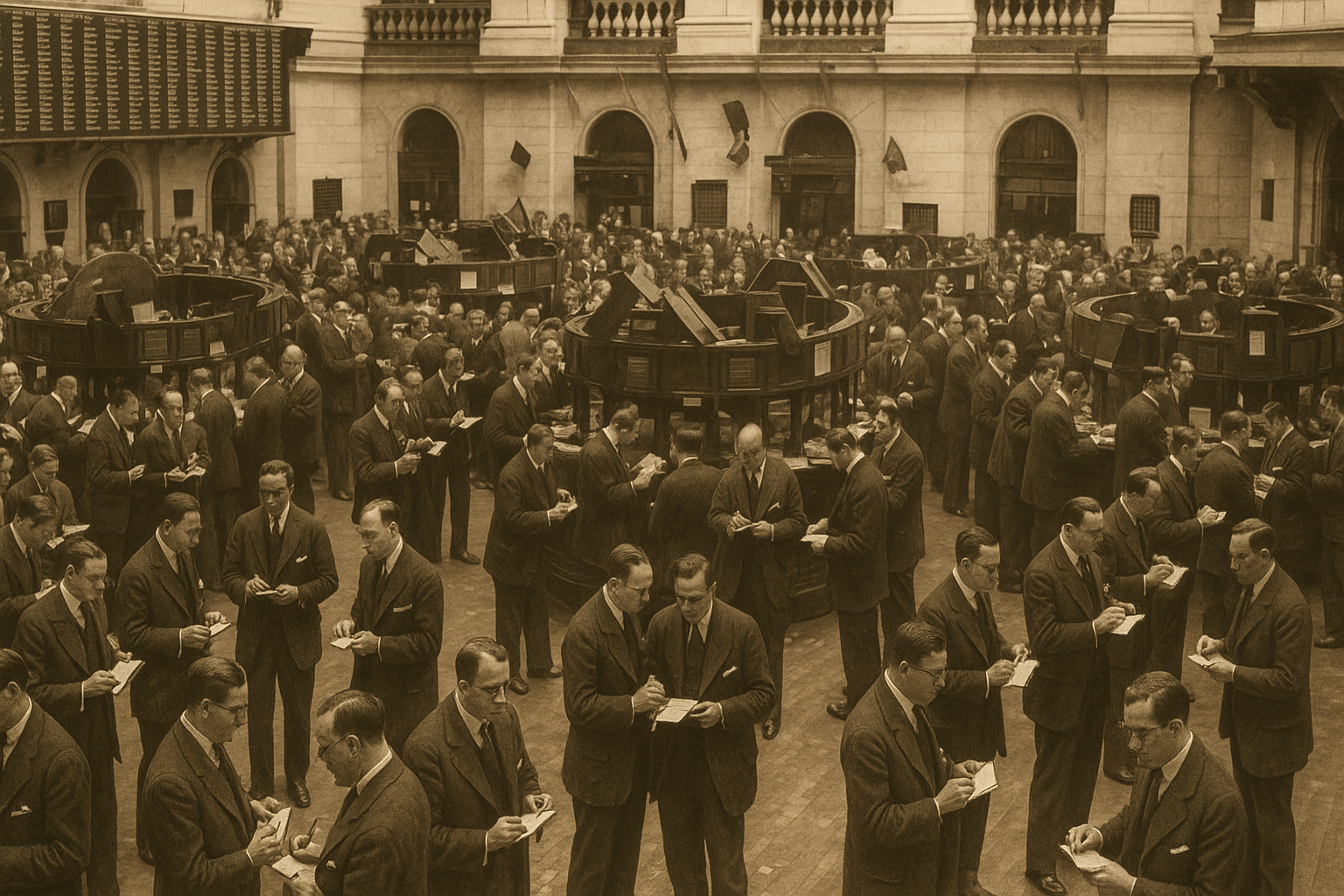
- Founded: May 17, 1792, through the Buttonwood Agreement signed by 24 brokers under a buttonwood tree on Wall Street.
- Founders: Early New York merchants and brokers seeking standardized rules for trading.
- Role: The NYSE is the largest stock exchange in the world by market capitalization (over $28 trillion in 2024). It lists iconic companies like Coca-Cola, IBM, and ExxonMobil.
- What it does: Provides a platform for trading equities, ETFs, and bonds. Known for its opening and closing bell ceremonies, it symbolizes American capitalism.
💻 Nasdaq
- Founded: February 8, 1971.
- Founders: Created by the National Association of Securities Dealers (NASD), now FINRA.
- Role: The world’s first electronic stock market, revolutionizing trading by eliminating physical trading floors.
- What it does: Specializes in technology and growth companies—think Apple, Microsoft, Amazon, and Tesla. Nasdaq is the second-largest exchange globally, with a market cap near $30 trillion.
- Innovation: Introduced automated trading and quote dissemination, paving the way for online investing.
⚖️ Chicago Board Options Exchange (Cboe)
- Founded: April 26, 1973.
- Founders: Established by the Chicago Board of Trade, with Joe Sullivan as its first president.
- Role: The first exchange to offer standardized options trading, transforming derivatives markets.
- What it does: Trades options on equities, indexes, and ETFs. Today, Cboe also operates futures and digital asset markets.
- Impact: Options trading allowed investors to hedge risk and speculate more efficiently, making Cboe a cornerstone of modern finance.
📊 American Stock Exchange (AMEX → NYSE American)
- Founded: Originated in the 19th century as the New York Curb Market, where traders literally operated outdoors on the street.
- Role: Once the third-largest U.S. exchange, handling about 10% of all securities traded.
- What it does: Historically specialized in small-cap stocks and options.
- Evolution: Acquired by NYSE Euronext in 2008 and rebranded as NYSE American, focusing on innovative companies and ETFs.
🧭 Conclusion: The Backbone of Global Capital
Together, these exchanges form the backbone of the U.S. financial system:
- NYSE represents tradition and scale.
- Nasdaq embodies innovation and technology.
- Cboe pioneered derivatives.
- AMEX gave smaller companies a voice.
Their histories—from brokers under a tree in 1792 to electronic platforms in the 21st century—mirror the evolution of capitalism itself. Reading their stories is not just about finance; it’s about understanding how America became the world’s economic powerhouse.
✅ This post is designed to take about 10 minutes to read, offering both historical context and modern relevance.
Would you like me to expand this into a timeline-style narrative, showing how each exchange emerged in sequence and how they influenced one another? That could make the history even more engaging.